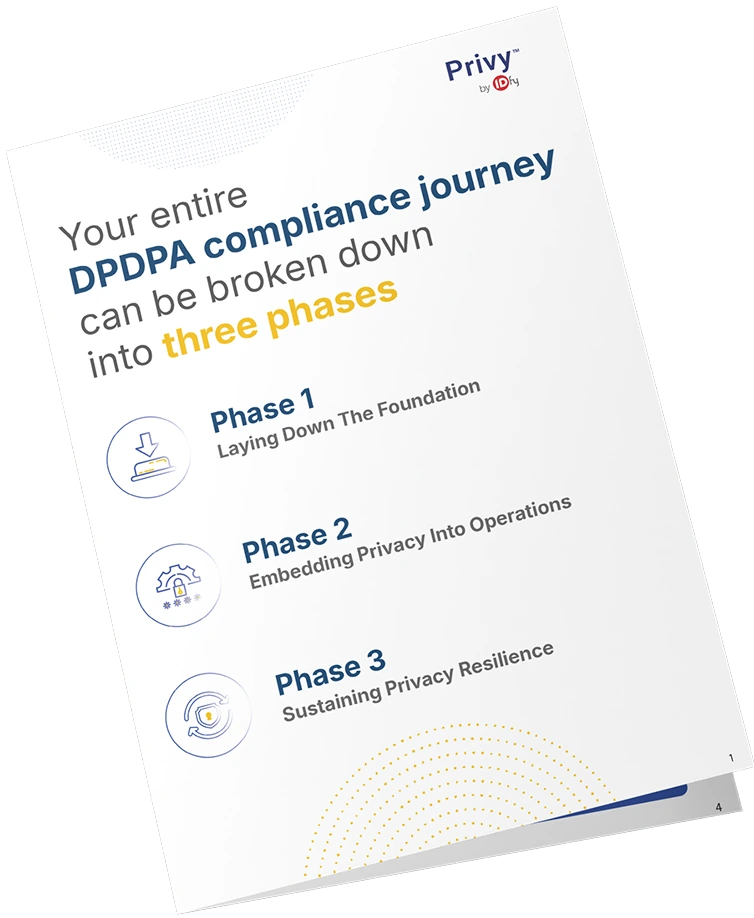
1. Laying the Foundation
-
Mapping and identifying personal data across systems
-
Cataloguing, categorising, and classifying PII
-
Ensuring readiness and gap assessments across people, processes, and tech
-
Conducting Privacy Impact Assessments (PIAs) to uncover risks early
2. Embedding Privacy Into Operations
-
Designing clear, multilingual consent notices
-
Managing the full consent lifecycle
-
Implementing cookie practices that strengthen privacy posture
-
Handling data principal grievances and requests for consent correction, erasure, deletion, etc.
-
Establishing structured third-party oversight
3. Sustaining Privacy Resilience
-
Ensuring that incident management reporting is aligned with the DPDP rules’ 72-hour mandate
-
Linking privacy modules like data governance, PIAs, consent, and rights
-
Continuous compliance across evolving sectoral and regulatory needs
-
A six-quarter roadmap to move from baseline to full compliance